How to Select the Best Solar Carport Solutions: Insights from Landpower, Global Leading Solar Carport Structure Supplier
Nov 10, 2025
How to Select the Best Solar Carport Solutions: Insights from Landpower, Global Leading Solar Carport Structure Supplier
The solar carport market presents a compelling dual-purpose solution, yet selecting the right system requires navigating complex technical and economic considerations. With the global solar carport market valued at USD 558.30 Million in 2024, projected to grow at 4.70% CAGR, reaching USD 883.76 Million by 2034, decision-makers face increasing options from suppliers worldwide. The question becomes: how do organizations identify the optimal solar carport solution that balances structural integrity, energy production, and long-term value? This challenge has elevated the importance of working with a Global Leading Solar Carport Structure Supplier that combines engineering expertise with proven manufacturing capabilities.
Understanding Solar Carport Selection Fundamentals
Solar carports represent one of the most technically complex applications in the solar mounting industry, requiring simultaneous consideration of structural engineering, electrical systems, and site-specific factors. Unlike traditional solar installations, carports must satisfy multiple functional requirements while operating in challenging environmental conditions.
Critical Structural Design Parameters
The foundation of any successful solar carport begins with proper structural engineering. The structure must support both dead loads (weight of materials) and live loads (wind, rain, and snow), with foundation requirements typically extending 1.5-2 meters deep depending on soil conditions and local building codes.
Load-Bearing Calculations: Structural engineers must account for the combined weight of steel frameworks, solar panels, mounting hardware, and environmental loads. Wind resistance becomes particularly critical, as elevated carport structures experience higher wind forces than ground-mounted systems.
Seismic Considerations: In earthquake-prone regions, carport structures require specialized seismic design considerations. The design must account for factors such as load-bearing capacity, wind resistance, and aesthetic integration with the surroundings, with particular attention to moment connections and lateral stability.
Material Selection: Steel represents the predominant structural material for solar carports due to its strength-to-weight ratio and durability. However, material grade, coating specifications, and connection details significantly impact long-term performance and maintenance requirements.
Electrical System Integration Strategies
Solar carport electrical design requires careful consideration of component placement and access requirements. The biggest consideration (and most contentious for some) is where to locate the inverters. You can mount them on the top of the carport columns, or you can mount them at ground level on a separate support structure.
Inverter Placement Options: Column-mounted inverters reduce wiring costs and improve security but complicate maintenance access. Ground-mounted inverter configurations simplify service procedures while potentially increasing installation complexity.
Cable Management: Proper cable routing protects electrical components while maintaining accessibility for maintenance. Underground conduit systems offer superior protection but increase installation costs compared to overhead routing methods.
Grounding Systems: Solar carports require comprehensive grounding strategies that address both electrical safety and lightning protection across large metallic structures.
Site Assessment and Permitting Considerations
Successful solar carport projects require thorough site evaluation and regulatory compliance. One of the most consequential considerations is whether the authority having jurisdiction (AHJ) is going to treat the solar carport as a building or part of a building.
Building Code Compliance: Jurisdictional requirements vary significantly regarding whether carports are classified as structures or buildings, affecting design standards, permitting processes, and inspection requirements.
Utility Interconnection: Grid connection requirements for solar carports may differ from rooftop installations, particularly regarding electrical metering, disconnection procedures, and utility access requirements.
Environmental Impact: Site conditions including drainage, landscaping, and existing infrastructure influence carport placement and design specifications.
Financial and Operational Evaluation Framework
Selecting the Best Solar Carport Solutions requires comprehensive financial analysis that extends beyond initial capital costs to include operational considerations and long-term value creation.
Total Cost of Ownership Analysis
Capital Expenditure Components: Initial costs encompass structural materials, electrical equipment, installation labor, and permitting expenses. Steel carport structures typically represent 40-60% of total project costs, making supplier selection critical for project economics.
Operational Expenses: Maintenance requirements vary significantly based on structural design and component quality. Well-engineered carport structures minimize ongoing maintenance while providing decades of reliable service.
Revenue Optimization: Proper system design maximizes energy production through optimal panel orientation and spacing while minimizing shading losses from structural elements.
Performance and Reliability Metrics
Energy Yield Projections: Carport installations often achieve higher energy yields than rooftop systems due to optimal panel orientation and reduced thermal effects from improved ventilation.
System Availability: Reliability depends heavily on structural quality and electrical design. Premium carport structures deliver 99%+ system availability through robust design and quality manufacturing.
Scalability Considerations: Modular carport designs enable future expansion while maintaining structural integrity and aesthetic consistency across installations.
Landpower Solar: Engineering Excellence in Carport Solutions
Within this complex selection landscape, manufacturers with deep engineering expertise and proven track records provide crucial advantages for project success. Landpower Solar has established itself through systematic focus on the technical challenges that determine carport project outcomes.
Over 12 years of specialized manufacturing experience has enabled Landpower to develop comprehensive carport solutions that address the multifaceted requirements of modern solar installations. Their approach integrates structural engineering, manufacturing excellence, and practical installation considerations into cohesive system designs.
Manufacturing Capabilities and Technical Expertise
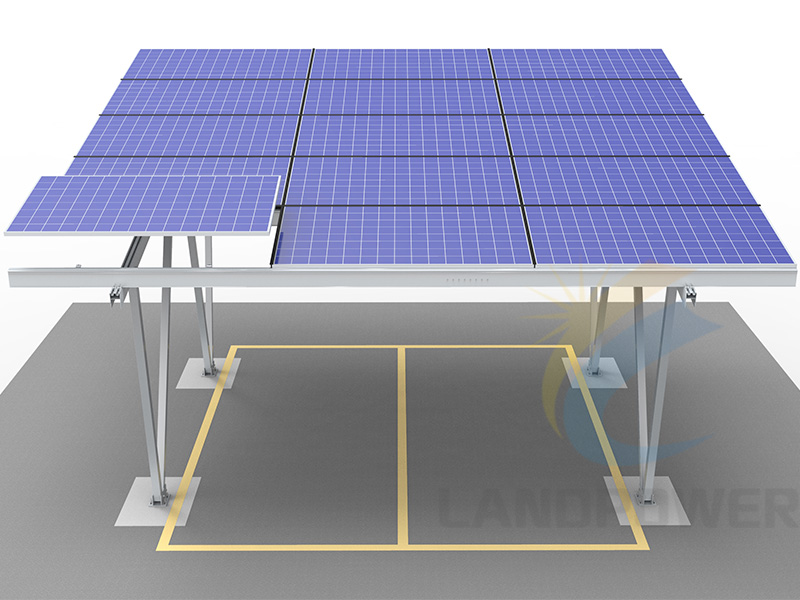
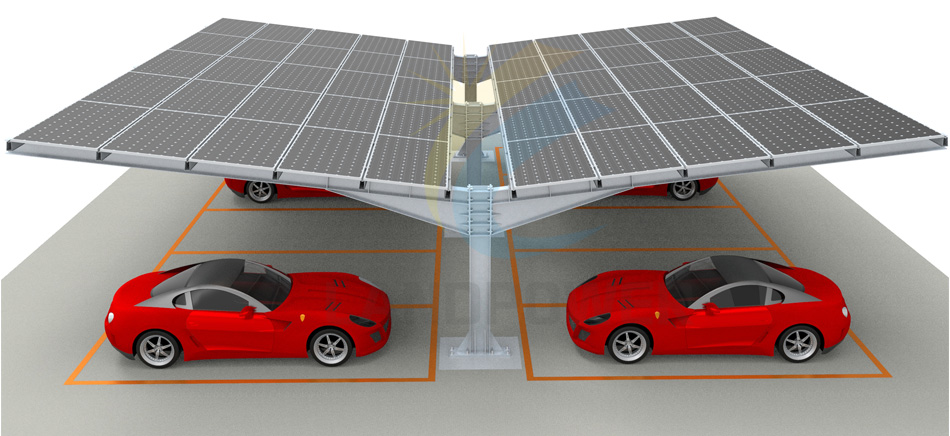
Landpower's carport manufacturing operations reflect the precision required for large-scale structural components. Their steel solar carport structures undergo extensive engineering analysis to optimize material usage while ensuring compliance with international building codes and standards.
Advanced Fabrication Processes: Sophisticated welding and finishing operations ensure consistent quality across high-volume production runs. Computer-controlled cutting and forming equipment enables precise component dimensions that simplify field assembly procedures.
Quality Assurance Systems: Comprehensive testing protocols verify structural performance, corrosion resistance, and dimensional accuracy before shipment. These quality control measures minimize field issues and ensure reliable long-term performance.
Customization Flexibility: Unlike standard product manufacturers, Landpower maintains the capability to modify designs for specific project requirements without compromising production efficiency or quality standards.
Product Portfolio and Application Range
Landpower's carport solutions serve diverse market segments, each presenting unique technical and economic requirements:
Commercial Installations: Retail centers, office complexes, and industrial facilities utilize carport structures that combine parking functionality with substantial energy generation capacity. These projects typically require engineered solutions that accommodate site-specific constraints while meeting aesthetic requirements.
Institutional Applications: Schools, hospitals, and government facilities benefit from carport installations that provide covered parking while generating renewable energy. These projects often require compliance with specialized design standards and procurement procedures.
Utility-Scale Developments: Large carport installations over parking areas enable dual land use that maximizes property value while generating significant energy revenues. These projects demand structural systems capable of supporting extensive solar arrays while maintaining vehicle access.
Client Success and Market Presence
Landpower's international project portfolio demonstrates their capability to deliver successful carport installations across varying environmental and regulatory conditions. Their systems have been deployed in tropical climates requiring enhanced corrosion protection, temperate regions with moderate environmental loads, and challenging locations with extreme weather conditions.
Project diversity reflects Landpower's technical versatility and manufacturing capability. From small commercial installations serving local businesses to large institutional projects supporting organizational sustainability goals, their carport structures have proven durability and performance across multiple market segments.
The company's collaborative approach with installers, developers, and end customers enables optimized solutions that address project-specific requirements while leveraging standardized manufacturing processes for cost efficiency.
Innovation and Future Development
Continued market leadership requires ongoing investment in product development and manufacturing capability enhancement. Landpower's research initiatives focus on emerging technologies that improve carport performance while reducing installation costs and complexity.
Current development programs include advanced structural optimization techniques that reduce material requirements without compromising performance, enhanced connection systems that accelerate installation procedures, and integrated electrical components that simplify field wiring requirements.
Market Positioning and Industry Outlook
The solar carport market's projected growth creates opportunities for manufacturers who can deliver reliable, cost-effective solutions at scale. Landpower's combination of engineering expertise, manufacturing capability, and international experience positions them advantageously within this expanding market.
Their focus on quality and customer success has enabled long-term relationships with installers and developers who value reliable supply chain partnerships. This approach supports sustainable business growth while contributing to broader solar industry development.
For comprehensive information about Landpower's solar carport solutions and technical capabilities, visit https://www.landpowersolar.com/
 get the latest subscribe for newsletter




 IPv6 network supported